
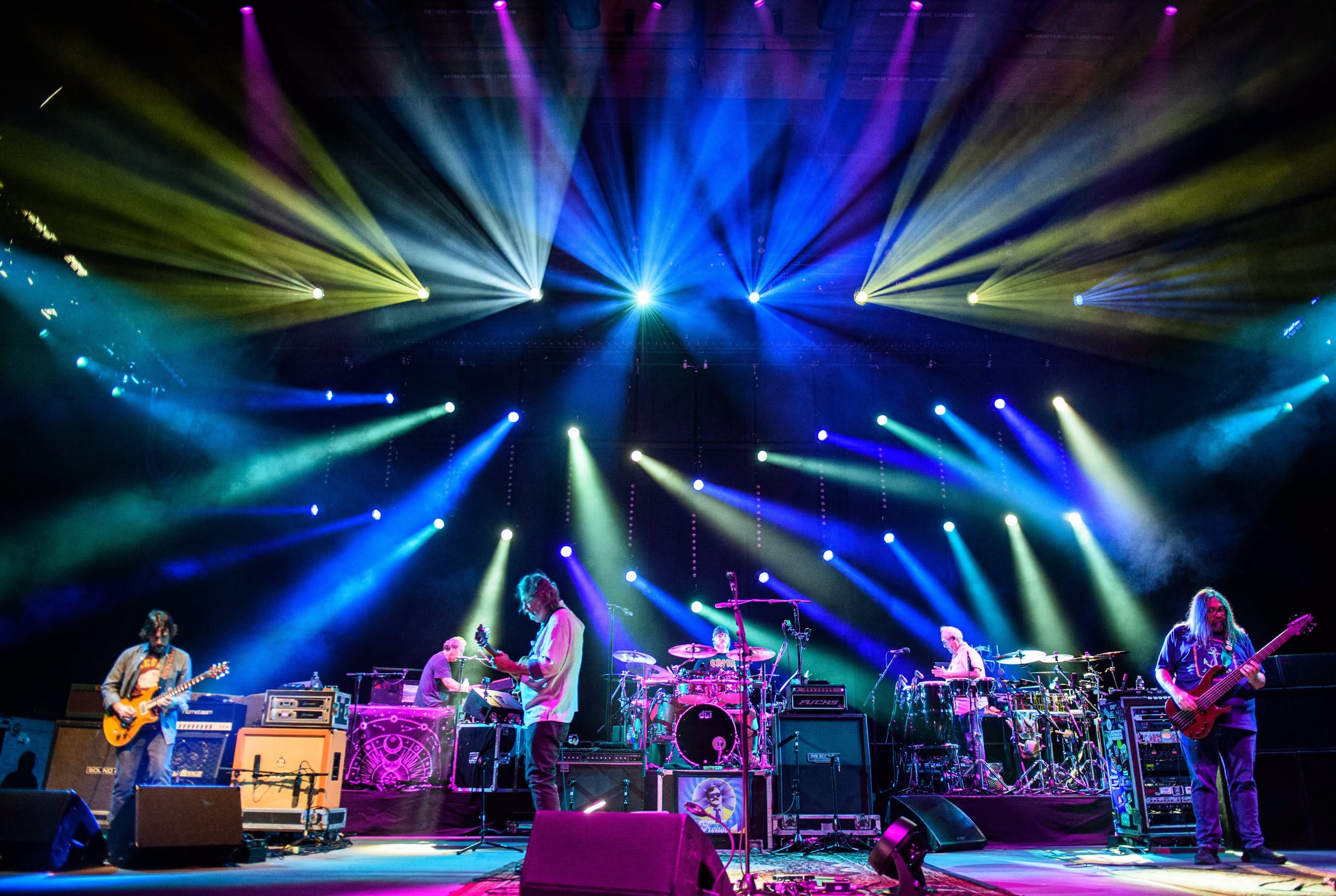
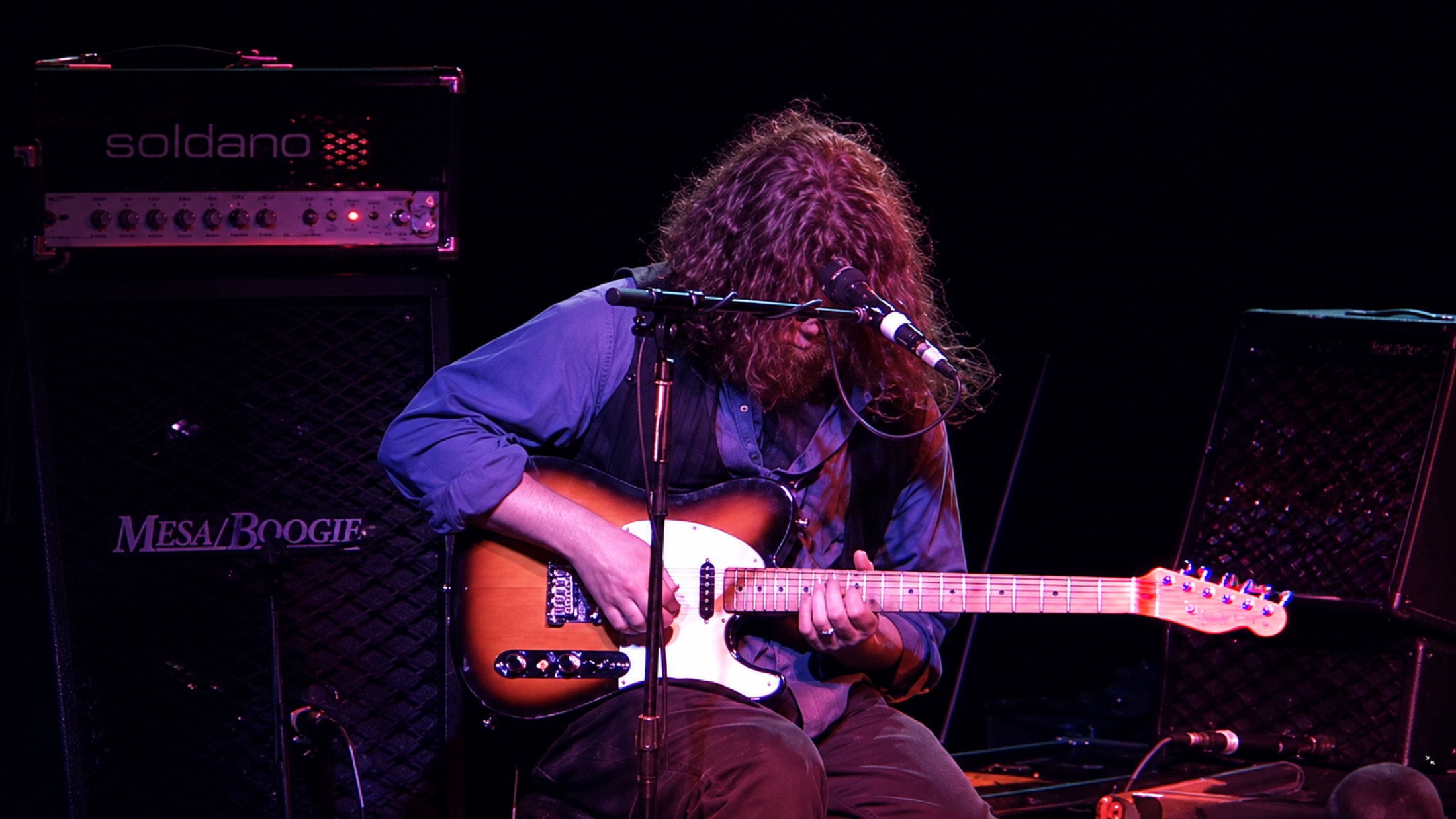
Burnthday.com is a working song list and living archive of Widespread Panic’s songbook. I built it to track what the band has played, what has gone missing, what is still in rotation, and what might be left for tonight.
The point is not to predict a Widespread Panic show. That would ruin it. The point is to make the possibilities visible.
For more than forty years, that possibility has been part of the bargain. Widespread Panic grew out of Athens, Georgia, where John Bell, Michael Houser, Dave Schools and Todd Nance began playing together in the mid-1980s. The repertoire grew along with the band. Originals accumulated beside blues songs, soul songs, country songs and other people's strange old tunes until a setlist could reach backward through decades without feeling like a history lesson.
You went because you did not know what they were going to play. That is still the whole thing.
How I got here
My sister went to the University of Georgia in 1997, which meant Widespread Panic started making its way back to North Carolina with her. I saw my first show at Walnut Creek in Raleigh in 1999. Not long after, she gave me Another Joyous Occasion for Christmas, the live record the band made with the Dirty Dozen Brass Band. I was done for.
Then I broke my leg playing lacrosse.
There are worse things that can happen to a teenager with a stack of Panic shows. I had a CD burner, traded recordings and suddenly a great deal of time. Shows arrived through the mail. I copied them, listened to them and started hearing the differences from night to night. The same song could be loose one night and furious the next. A segue could disappear for years. A cover could turn up without warning and make perfect sense.
One afternoon my mom found me buried under headphones and told me, “Don’t burn the day away. Get outside and go have fun.”
Burnthday came from that. It became my screen name on Panic fan sites like Phantasy Tour and The Sandbox long before there was a website. When I eventually put the song list online, the name came with me.
The Everyday Companion
The deeper I got into the band, the more useful the Everyday Companion became. Before a complete history could be searched from a phone, it was the map. Shows, songs, guests, dates, gaps, debuts, last-played dates and all the accumulated work of fans who had bothered to keep track of it.
I was studying economics and statistics at the time, which turned out to be a particularly dangerous combination for a Panic fan.
I started running numbers for no good reason other than wanting to know. How often did they play a song? How long did it usually stay away? What had disappeared from the last few shows? What was still sitting there untouched?
The statistics could never tell you what the band would do. They could tell you something interesting about what remained possible.
Then I saw Garrie Vereen's song list.

The band had resisted setlists for its first decade. They wanted the shows to happen naturally. But as Dave Schools later explained, that approach had a flaw. The same batch of songs kept getting started by the same hands, sets got repetitive and good songs got forgotten. Around 1994 they gave in, partly to keep things fresh for themselves and partly for the people who kept coming back.
Garrie kept the working list for years. Black meant played last night, no chance. Red meant two nights ago. Green meant three. Everything else on the sheet was fair game. Instead of staring at hundreds of dates, the band could look at one piece of paper and see the shape of its own rotation.
Garrie once explained the intuition behind making a setlist simply enough: there is a Tuesday song and there is a Thursday song.
Garrie passed in 2011. This site keeps his method running on the fan side.
That was the idea I had been looking for.
The Spread Sheet
On July 27, 2007, I put my own version online as the Widespread Panic Spread Sheet. After each show, I crossed its songs off the master list in Photoshop. The previous four shows stayed visible in different colors, much as they did on the band’s working sheet, so you could look at it and immediately see what had been played and what was still sitting there.
There was nothing automatic about it. I updated the sheet after every show, from home, from hotel rooms on the road and from wherever I happened to land after a night out. For years, the whole thing was one enormous Photoshop file maintained by hand.
The timing was good because the way fans followed the band was changing too. Physical tapes gave way to downloads and online archives. Setlists began appearing while shows were still underway. Tapers like Bennett Schwartz and Z-Man found ways to send audio out of venues in real time. The distance between the person in the room and the person following from home became much smaller, and I kept changing the site along with it.
Jimmy Herring Has a Posse
A few odd side projects grew out of Burnthday along the way. The most visible was Jimmy Herring Has a Posse, a riff on the old Andre the Giant street-art campaign that somehow became shirts, stickers and its own little piece of Panic folklore.
Stickers found their way onto Jimmy’s volume pedals. His guitar tech, Eric Pretto, got a box of them at Red Rocks and wore one onstage. Derek Trucks wore one during the 2009 Allman Brothers and Widespread Panic run. People still turn up wearing them.
The best part was what happened to the money. Widespread Panic had sponsored a Make It Right house in New Orleans, and the fans decided to build one too. The House That Widespread Panic Fans Built, better known as the Panic Fans House, raised more than $50,000 toward a home in the Lower 9th Ward after Hurricane Katrina. Jimmy Herring Has a Posse put its proceeds in, across both runs of shirts.
That remains one of my favorite things that ever came out of this site.
When the band found it
In 2012 I moved to the Bay Area. A tweet eventually got me invited to Bob Weir’s TRI Studios. When I introduced myself, Dave Schools already knew who I was. He introduced me to Bob Weir as Widespread Panic’s statistician.
I did not correct him.
That meeting changed quite a lot. I went on to run digital strategy and creative direction for Hard Working Americans, which included Dave Schools and Duane Trucks, from 2013 through 2018.
TRI became part of my world too. I was there on Wednesdays while Bob Weir was streaming Weir Here, helped Dave produce the episode he hosted, and was there when Widespread Panic played the studio. For that show, Dave had me collect questions from fans for the band to answer during the broadcast.
Over the next several years, I worked on records Dave was producing, including sessions with Steve Kimock and Jerry Joseph at TRI Studios, as well as work with Daniel Hutchens. I worked with Todd Snider through albums, tours and everything in between, and on Widespread Panic’s own Trondossa festival.
During the pandemic, JoJo Hermann called with music to play and nowhere to play it. I was already producing Todd’s Sunday streams from his studio in East Nashville, so I brought JoJo in and we built Shut Up And Play around him and a vintage Webster spinet. I produced the series with the studio crew and worked with Widespread Panic to stream it live across the band’s social channels. It gave JoJo a place to build the solo catalog he would soon take back on the road, while raising money for Nuçi’s Space.
The note from Dave that means the most, though, had nothing to do with any of that. During the Hard Working Americans years, he noticed that I had labeled a Jacksonville show as Miami and sent me a correction:
I only mention it because I rely on your site to make setlists! LOL!
I had borrowed the band’s working-list idea to make something useful for fans. Years later, one of the people making the setlists told me he was using mine.
I am still pretty proud of that.
Nineteen years later
I no longer have to sit in a hotel room at two in the morning crossing song titles out in Photoshop. The archive now holds thousands of shows and tens of thousands of song performances, and much of what once took hours can update from structured data.
That has made it possible to go deeper instead of merely going faster. The Shelf follows songs that have gone 200 shows without a play. Purgatory keeps track of songs that appeared once and vanished. The Woodshed follows material in the current rotation that has not yet been played with Nick Johnson. Song histories, lyrics, tabs and old stories preserve some of what gets lost when music is reduced to a database.
The technology has changed almost beyond recognition since 2007. The reason for doing it has not. After a show ends, I still want to see what is left, how long something has been gone and what might feel different when it finally comes back. Before the lights go down again, I still want to wonder what they might play.
New to the rotation? Start here
How does the Widespread Panic song rotation work?
Widespread Panic rarely repeats a song within a run of shows. After each show, Burnthday crosses off every song played in the last four shows. What is left uncrossed is the pool the band is most likely drawing from tonight. That cross-off sheet is the heart of the site.
What is a bustout?
A bustout is a song the band brings back after a long absence. On Burnthday, a song that returns after 200 or more shows counts as a Bustout, and after 1,000 or more shows it is a Mega Bustout. Songs that go 200 shows without being played land on The Shelf.
Where does the data come from?
Three places. The master spreadsheet holds the song classifications and working list. Everyday Companion is the reference for song histories. Setlist.fm supplies the complete performance log. All of it is cross-checked before it ships.
Is Burnthday affiliated with Widespread Panic?
No. Burnthday is a fan project, built and paid for by one fan since 2007. Band members have been kind about it over the years, but the site is independent.
How often is the site updated?
After every show. Setlists land, the cross-off sheet gets reworked, and the tour stats recompute. Between tours the data layers refresh on a schedule.
How can I get in touch?
Email me at burnthdaywsp@gmail.com. Corrections are always welcome, especially setlist fixes, raps, teases, segues, song notes, photo credits or anything else I may have missed. You can also find Burnthday on Facebook, X and Instagram.
What does Alex do professionally?
Marketing. In 2014 Alex and his wife Katherine founded Digital Star Marketing, and he has since served twice as CMO at Series A startups. Today he builds websites for small businesses at Gnarlywhal. That career runs on many of the same skills as this site: statistics, an economics degree and an unhealthy attention to detail. Burnthday stays a not-for-profit fan project either way.
Friends of Burnthday
Nearly two decades of this doesn’t happen alone.
To the people who helped get the boys onstage, rolled tape, scribbled setlists, and made sense of it all: thank you.
To the band and management for letting the gear in, and to Horace Moore for storing the soundboards and opening the vault. To Larry Acquaviva for keeping the notebooks and Dave B. for decoding them before the internet. To Garrie Vereen, whose song list is why this site exists.
To Everyday Companion, the ultimate source for all of this, and to Ted Rockwell, Will Duckworth, and Scott Holcomb.
To Home Team FM, and everyone who helped lead the transfer that put all but maybe twenty missing tapes into the Internet Archive’s Live Music Archive. To Fred Adams for bringing his camera into the Uptown Lounge, and to everyone keeping those memories alive on video.
To the photographers whose work brings these pages to life: Josh Timmermans, Andy Tennille, Colin Vereen, Tom Smith, and the extended Panic family who have shared their shots over the years. If your photo is here without the right credit, or you’d rather I take it down, let me know and I’ll make it right.
To the tapers, my friends, and my wife Katherine, for helping me make it back so we could listen together again. I seriously love you all. Thank you.
This has never been a business. It is still an independent fan project, and I am still here because I apparently never learned to stop staring at the song list.
My mom did tell me to go outside...
She just never said I had to stop listening.
The Fine Print
Burnthday is an independent, not-for-profit fan project and is not affiliated with, authorized by or endorsed by Widespread Panic, its management or its affiliates. Lyrics, compositions, photographs and other copyrighted works remain the property of their respective creators.